How to Use Home Calculator for Fast, Accurate Pricing
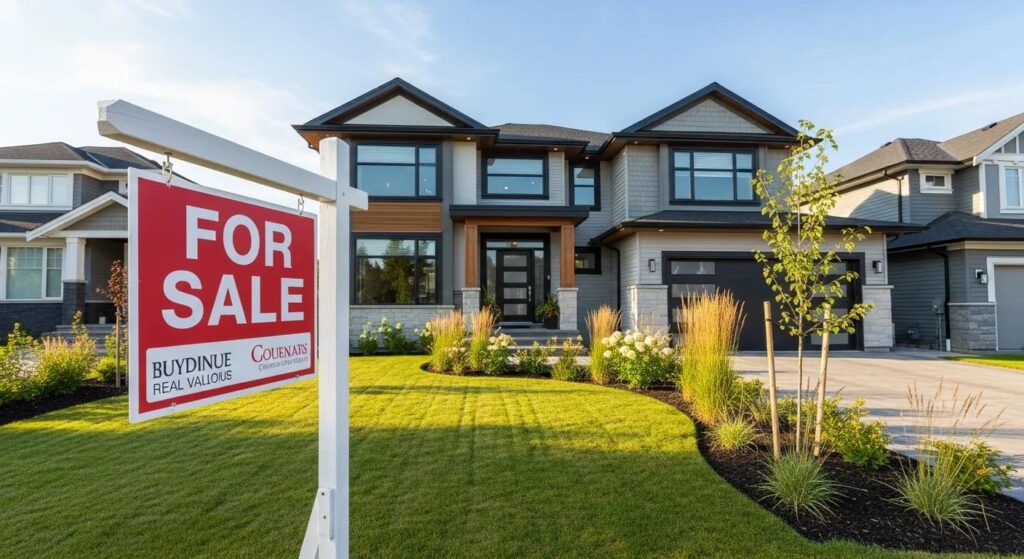
Instant Home Value Calculator: Complete User Guide 2026 for Accurate Canadian Property Valuation
Welcome to your go-to guide for understanding and using the Instant Home Value Calculator, a handy tool designed to help Canadian homeowners and buyers get a quick, reliable estimate of their property’s worth. Whether you’re thinking about selling, buying, or just curious about your home’s value, this calculator offers a straightforward way to get insights into the market. Powered by homsy.ca, it combines the latest data and smart algorithms to give you an estimate that reflects current trends in the Canadian real estate market.
In this guide, we’ll walk you through how the calculator works, what information you’ll need to provide, the methods behind the valuation, and how to make sense of the results. Plus, we’ll share some expert insights from Alex Goodman, a trusted Canadian realtor known for his deep market knowledge and commitment to helping clients make informed decisions. With his expertise and the power of homsy.ca, you’re well-equipped to navigate the real estate landscape in 2026.
How Does the Instant Home Value Calculator Estimate Property Value in Canada?
The Instant Home Value Calculator uses a blend of recent sales data, property details, and current market trends to estimate your home’s value. By analyzing comparable properties and adjusting for unique features, it provides a snapshot that reflects what’s happening in your local market right now. Thanks to homsy.ca’s integration, the calculator taps into up-to-date listings and sales information, enhancing its accuracy. Explore the Sold Properties to see recent market activity that influences valuations.
Alex Goodman emphasizes that while these estimates are a great starting point, they work best when combined with professional advice, especially for unique properties or those in rapidly changing markets. For personalized assistance, you can Contact Us to connect with expert agents.
What Inputs Does the Calculator Require for Accurate Home Valuation?

To get the most accurate estimate, the calculator asks for some key details about your property. Here’s what you’ll typically need to provide:
- Property Address: This helps the calculator understand your local market conditions. You can explore properties in specific cities like Toronto, Mississauga, or Brampton to get a sense of local pricing.
- Property Type: Whether it’s a detached home, semi-detached, condo, townhouse, or another type.
- Square Footage: The total living area, which plays a big role in valuation.
- Number of Bedrooms and Bathrooms: These details help fine-tune the estimate.
- Recent Renovations: Upgrades or improvements can increase your home’s value.
Providing accurate and complete information is key. Alex Goodman advises homeowners to gather all relevant details beforehand to get the best possible estimate from the calculator on homsy.ca. For more detailed property searches, use the MLS Map to explore listings visually.
Which Calculation Methods Are Used to Determine Home Prices?
The calculator uses a mix of proven methods to arrive at your home’s estimated value:
- Comparative Market Analysis (CMA): Looks at similar homes recently sold nearby and adjusts for differences.
- Automated Valuation Models (AVMs): Uses statistical models and algorithms to analyze large datasets quickly.
- Cost Approach: Estimates what it would cost to replace your home, factoring in depreciation and land value.
By combining these approaches, the calculator provides a balanced estimate. Alex Goodman notes that while these models are powerful, they work best when paired with local market knowledge and professional insight.
For those interested in the technical side, research into Canadian real estate appraisal systems often highlights advanced regression methods that improve valuation accuracy.
Canadian Real Estate Appraisal System & Regression Methods
This paper summarizes the real estate appraisal system that has been developed for and appraisal system are: (1) property-specific individual appraisal using a new regression method
Designing and implementing a real estate appraisal system: the case of Québec Province,
Canada, O Kettani, 2015
How to Use the Instant Home Value Calculator: Step-by-Step Guide
Getting started with the Instant Home Value Calculator on homsy.ca is simple. Follow these steps to get your home’s estimated value:
- Visit the Calculator Page: Head over to the Instant Calculator section on homsy.ca.
- Enter Property Details: Fill in your property’s address, type, size, and any recent renovations.
- Submit Your Information: Once everything is entered, submit the form.
- Review the Results: The calculator will provide an estimated value range along with helpful insights.
What Are the Key Steps to Enter Property Details Correctly?
Accuracy is crucial for a reliable estimate. Here’s how to make sure your inputs are spot on:
- Double-Check the Address: Make sure it’s correct to avoid errors in location data. You can verify addresses by browsing homes for sale in Toronto or other cities.
- Specify Property Type: Choose the right category to reflect your home accurately, such as condos for sale in Mississauga or houses for sale in Brampton.
- Provide Accurate Measurements: Use precise square footage and room counts.
- Include Renovation Details: Mention any upgrades that could boost your home’s value.
Alex Goodman recommends gathering all this information ahead of time to streamline the process and get the best estimate possible. If you need help, Find the Right Agent for you to assist with your property evaluation.
How to Interpret the Estimated Home Value Results?
Once you have your estimate, here’s how to understand what it means:
- Understand the Range: The calculator usually gives a low and high estimate to reflect market variability.
- Consider Market Trends: Keep an eye on local real estate trends, which can affect your home’s value. Check out Newly Listed properties to see current market activity.
- Use as a Starting Point: Think of the estimate as a helpful guide, not a final appraisal.
Alex Goodman suggests using these estimates alongside professional advice to make the best decisions about buying or selling. For sellers, Find the Right Agent for You to maximize your sale price.
What Canadian Real Estate Market Trends Affect Your Home Value in 2026?
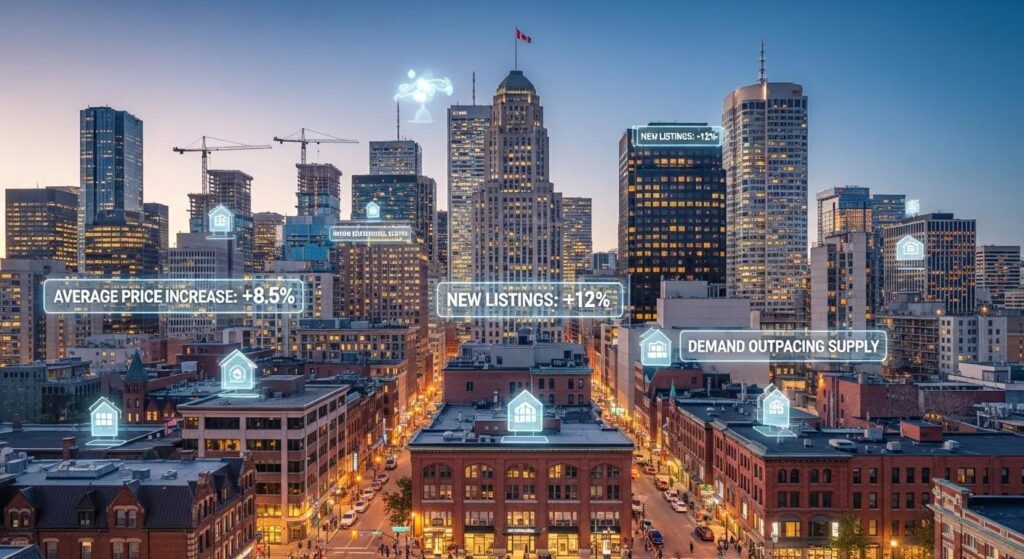
In 2026, several important trends are shaping the Canadian real estate market and influencing home values:
- Rising Interest Rates: Higher mortgage rates can cool demand, impacting prices.
- Urbanization: Growing populations in cities like Markham, Oakville, and Richmond Hill are driving up demand and property values.
- Supply Chain Issues: Challenges in construction materials can limit new housing supply, pushing prices up.
Understanding these trends helps homeowners and buyers make smarter decisions. Alex Goodman often advises clients to stay informed about these factors to time their real estate moves wisely. Explore Affordable Homes Under 1.5 Million or Luxury Homes to see how market segments are evolving.
How Do Regional Market Data Influence Property Valuations?
Local market data is key to accurate valuations. Factors like average home prices, sales activity, and inventory levels vary by region and can significantly affect your property’s estimated value. Homsy.ca integrates regional data to tailor estimates to your specific area, giving you a clearer picture of your home’s worth. Whether you’re interested in detached homes in Vaughan or condos in Burlington, regional insights matter.
Where Can You Find Updated CREA and Statistics Canada Housing Data?
For the most reliable and current housing data, check out these resources:
- Canadian Real Estate Association (CREA): Offers detailed stats on home sales, prices, and trends nationwide.
- Statistics Canada: Provides economic and demographic data that impact housing markets.
- Local Real Estate Boards: Many regions publish regular market reports that offer valuable insights.
Alex Goodman recommends these sources for anyone serious about understanding the market or planning a real estate transaction. For direct assistance, Contact Us anytime.
What Are Common Questions About Using Free Online Property Value Estimators?
Many users wonder about the reliability and usefulness of free online estimators. Here are some common questions:
- How Accurate Are These Estimates?: They’re a helpful starting point but may not capture unique property features or local nuances.
- Can I Trust the Data?: Accuracy depends on the quality and freshness of the data the calculator uses.
- What Should I Do with the Estimate?: Use it as a guide and consider consulting a professional for a detailed appraisal.
Alex Goodman encourages users to view these tools as part of a broader research process rather than a standalone solution. For more detailed property searches, explore Land For Sale or Commercial Retail For Sale listings.
How Accurate Are Instant Home Value Calculators Compared to Professional Appraisals?
While instant calculators provide quick estimates, professional appraisals offer a deeper dive into your property’s value. Appraisers consider factors like condition, unique features, and local market dynamics that automated tools might miss. For important decisions, Alex Goodman recommends getting a professional appraisal to complement the calculator’s estimate.
Academic studies also highlight that automated valuation models can sometimes be misunderstood in terms of their accuracy.
Understanding Automated Valuation Model Accuracy
Put simply most users of these products misunderstand the level of accuracy involved. This the accuracy of basic automated valuation models under a range of different model scenarios
Automated valuation model accuracy: some empirical testing, P Rossini, 2008
What Factors Can Affect the Reliability of Online Home Price Estimates?
Several things can impact how reliable an online estimate is, including:
- Data Quality: The estimate is only as good as the data behind it.
- User Input: Incorrect or incomplete information can skew results.
- Market Volatility: Fast-changing markets can make estimates outdated quickly.
Being aware of these factors helps you interpret estimates wisely. Alex Goodman stresses the importance of combining these tools with professional guidance to navigate uncertainties.
Understanding the limits and uncertainties of automated valuation models is key for anyone relying on these tools.
Assessing AVM Accuracy & Valuation Uncertainty
to identify uncertainty surrounding automated valuation models (AVMs) valuations and the accuracy of an AVM estimate of value when being assisted by such AVM as a valuation tool.
Assessing the accuracy of individual property values estimated by automated valuation models, 2023
Conclusion
Utilizing the Instant Home Value Calculator empowers Canadian homeowners and buyers to gain quick insights into property valuations, enhancing decision-making in a dynamic market. By providing accurate estimates based on current data and trends, this tool serves as a valuable resource for understanding your home’s worth. To maximize your real estate strategy, consider combining these estimates with professional advice for the best outcomes. Start exploring your property’s potential today with our Instant Home Value Calculator on homsy.ca.
Explore more on MLS Map, browse Detached For Sale, Semi-Detached For Sale, or check out Land For Sale. Find your next home in Toronto, Mississauga, or Brampton. Looking for condos or townhomes? Explore Condos for sale in Mississauga and Ajax townhouses. Ready to sell? Find the Right Agent for You or Contact Us for expert guidance.